

AI-generated illustration · MexicoDentalTreatment.com
What Are Full Dentures?
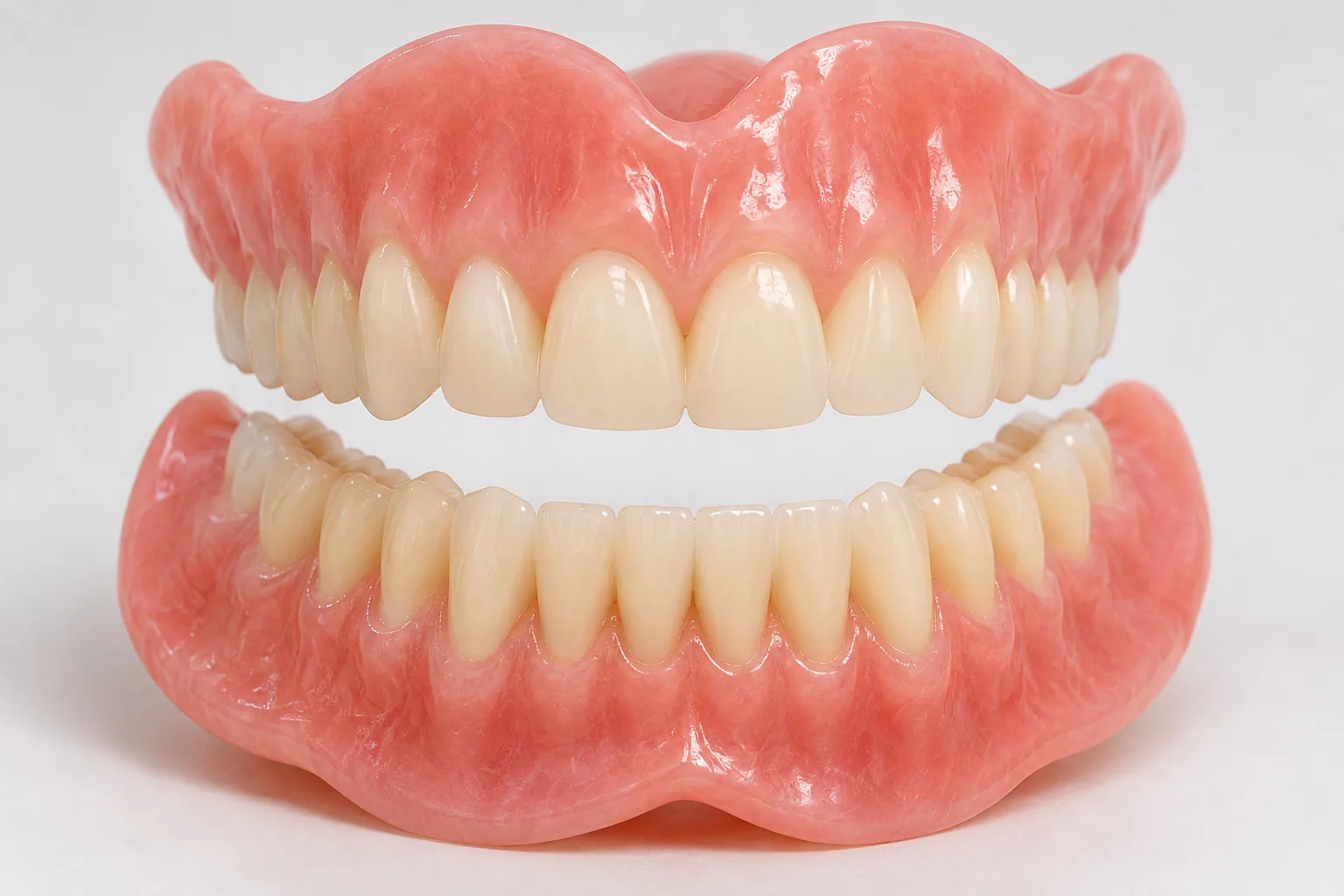
Full dentures, also known as complete dentures, are removable dental prostheses designed to replace all teeth in the upper or lower dental arch (jaw), or both. They consist of artificial teeth attached to a custom-made base that rests on the gums and underlying supporting tissues. [1, 2]
Conventional full dentures obtain their support from the residual alveolar ridges (jawbone ridges remaining after tooth loss) and surrounding oral tissues. Their retention and stability depend on the anatomy of the supporting structures, the adaptation of the denture base, saliva, and muscle coordination. [1, 3]
The design differs between the upper and lower dental arches. Maxillary dentures (upper dentures) typically extend across the palate (roof of the mouth), providing a broad surface for support and retention. Mandibular dentures (lower dentures) have a smaller supporting area and must accommodate movements of the tongue and surrounding muscles, making retention more challenging. [4]
AI-generated illustration · MexicoDentalTreatment.com
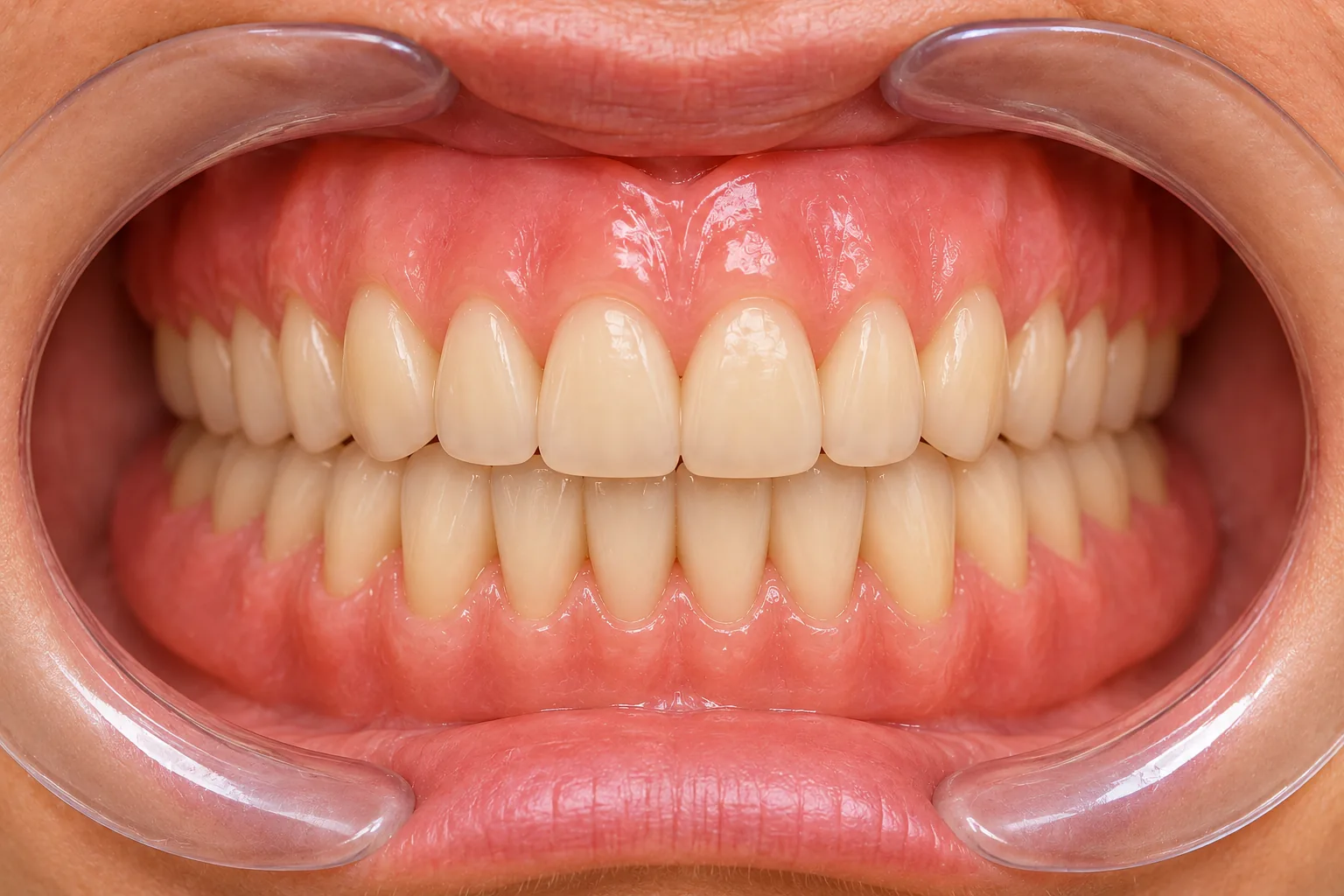
Conventional full dentures restore dental appearance and improve oral function. [2] However, their retention, stability, and masticatory efficiency (chewing efficiency) are generally more limited than those of implant-supported dentures.
Who May Be a Candidate for Full Dentures?
Full dentures may be recommended for individuals who have already lost all their natural teeth in one or both dental arches, or whose remaining teeth cannot be preserved. They may also be considered for patients who prefer a removable prosthesis, are not suitable candidates for dental implant treatment, or seek a more affordable alternative to implant-retained overdentures.
The dentist evaluates the patient's oral health, remaining teeth, and supporting tissues to determine whether full dentures are an appropriate treatment option. [4]
Before proceeding with the extraction of all remaining teeth in a dental arch, patients should consider obtaining a second opinion to determine whether any teeth can be preserved.
Treatment Process
The fabrication of conventional full dentures involves several clinical and laboratory procedures. The number of appointments and treatment sequence depend on the patient's oral condition and the techniques used. [5]
Step 1: Clinical Examination and Treatment Planning
The dentist evaluates the oral tissues, jawbone, jaw relationships, and any remaining natural teeth. Dental X-rays may be recommended to assess underlying structures or identify conditions that could affect treatment. [5]
Based on the examination findings, the dentist establishes a treatment plan and determines whether extractions or other procedures are necessary before denture fabrication.
Step 2: Impressions or Digital Scans
Conventional impressions [5] or digital scans are obtained to record the anatomy of the tissues that will support the dentures.
When traditional impression techniques are used, preliminary impressions may be followed by more detailed final impressions to improve the accuracy of the denture fit.
Step 3: Jaw Relation Records and Tooth Selection
The dentist records the relationship between the upper and lower jaws, including the appropriate vertical dimension (distance between the jaws) [1] and jaw position.
Artificial teeth are selected according to the patient's facial characteristics, available space, esthetic preferences, and functional requirements.
Step 4: Wax Try-In
Artificial teeth are arranged in wax to allow evaluation before the final dentures are fabricated.
During this appointment, the dentist assesses tooth positioning, facial support, appearance, speech, and occlusion (how the upper and lower teeth meet) [1].
Adjustments can be made before the final fabrication.
Step 5: Final Denture Fabrication
After the tooth arrangement is approved, the dental laboratory processes the dentures using the selected materials.
The completed prostheses are finished and polished before delivery.
Step 6: Denture Delivery and Adjustments
The dentist evaluates the fit, retention, stability, and occlusion of the completed dentures.
Adjustments are performed as needed to relieve pressure areas or correct bite discrepancies.
Patients receive instructions on denture insertion, removal, cleaning, and proper care. Follow-up appointments may be necessary to address discomfort or functional difficulties.
Treatment Timeline
The time required to complete conventional full dentures depends on the patient's oral condition, whether preliminary treatment is necessary, and the dental laboratory's fabrication schedule.
For patients whose gums and extraction sites have already healed, full dentures may be completed over several appointments within a few days to approximately two weeks, depending on the complexity of the case.
Dental clinics in Mexico that regularly treat international patients may offer more condensed treatment schedules to accommodate patients with limited time in the country. This may be possible through coordinated appointments and access to on-site or nearby dental laboratories. However, the treatment timeline should still allow for all necessary clinical procedures and adjustments.
When tooth extractions are necessary, an initial healing period is generally recommended before final impressions are taken. The duration of healing varies according to the patient's clinical condition and the extent of the extractions. [6]
Following extractions, gradual changes in the gums and jawbone may affect the fit of dentures over time, potentially requiring relining (adding material to the denture base to improve its fit) or replacement in the future. [3, 7]
Patients traveling to Mexico should confirm the expected number of appointments, treatment duration, and availability of follow-up adjustments before making travel arrangements.
Materials Used for Full Dentures
Conventional full dentures are generally fabricated using an acrylic resin base with artificial teeth made from acrylic, composite resin, or porcelain. [7] The selection of materials influences the appearance, durability, and wear resistance of the denture.
Denture Base
The denture base is most commonly made from polymethyl methacrylate (PMMA), a type of acrylic resin widely used in removable dental prostheses.
PMMA can be processed to closely adapt to the contours of the supporting oral tissues and is available in shades that resemble natural gum tissue. The material also allows for adjustments, repairs, and relining when clinically necessary.
Artificial Teeth
Acrylic resin teeth are widely used in conventional full dentures. They bond to acrylic denture bases and are relatively easy to adjust and repair, although they may wear more quickly than harder materials.
Composite resin teeth contain reinforcing components designed to improve properties such as wear resistance. Their durability and clinical performance vary according to the specific material.
Porcelain teeth are less commonly used in modern full dentures but remain an available option. They offer high wear resistance but are more brittle, require mechanical retention within the acrylic base, and may cause greater wear of opposing natural teeth or restorations.
The dentist selects the artificial teeth based on their shape, size, shade, wear resistance, and the patient’s clinical requirements. Their arrangement is planned to achieve appropriate occlusion (how the upper and lower teeth meet) [1], facial support, and appearance.
Benefits and Limitations of Full Dentures
Benefits
- Restoration of appearance: Full dentures replace all missing teeth in a dental arch and provide support for the lips and surrounding facial tissues. [2, 6]
- Improved oral function: They improve mastication (chewing) and speech in patients with complete tooth loss. [2]
- Nonsurgical tooth replacement: Full dentures replace missing teeth without requiring dental implants for support or retention. [4]
- Lower initial cost: They are generally more affordable than implant-supported full-arch restorations.
- Removable design: Dentures can be removed by the patient for cleaning and maintenance.
Limitations
- Retention and stability: Conventional dentures may shift during chewing or speaking, particularly in the lower arch. [4]
- Reduced chewing efficiency: Masticatory efficiency is generally lower than with implant-supported dentures.
- Adaptation period: Patients may initially experience changes in speech, increased saliva production, or difficulty chewing certain foods while adjusting to their dentures. [6]
- Jawbone resorption: Gradual loss of jawbone after tooth loss may affect denture fit and stability over time. [3]
Cost of Full Dentures in Mexico
The cost of conventional full dentures in Mexico varies according to the materials used, laboratory procedures, and complexity of the treatment.
Dental clinics may provide separate prices for upper and lower dentures or offer a combined fee for both arches.
Patients should request a written treatment estimate specifying whether the quoted price includes the clinical examination, diagnostic imaging, impressions or digital scans, denture fabrication, try-in appointments, final fitting, and follow-up adjustments.
Denture Care and Long-Term Maintenance
Proper care and regular dental evaluations are essential for maintaining the condition of full dentures and the health of the supporting oral tissues. [7, 8]
Daily Care
Full dentures should be cleaned daily using a soft denture brush and a nonabrasive cleanser specifically formulated for dentures. Regular cleaning helps remove plaque, food debris, and deposits that may accumulate on the prosthesis. [7, 8]
The gums, tongue, and palate (roof of the mouth) should also be cleaned daily to maintain oral hygiene. [6]
Dentures should generally be removed during sleep to allow the supporting tissues to rest, unless otherwise instructed by the dentist. When not being worn, they should be stored according to the manufacturer’s recommendations. Hot water should be avoided because it may distort the denture base. [7, 8]
Long-Term Maintenance
Changes in the gums and underlying jawbone may gradually affect denture fit and stability. Relining may become necessary to improve the adaptation of the denture base to the supporting tissues. [3, 7]
Regular dental examinations allow the dentist to evaluate the condition of the dentures, assess the health of the oral tissues, and identify any need for adjustments or repairs. [7, 8]
The lifespan of full dentures varies according to the condition of the prosthesis, changes in the supporting tissues, and individual use.
Persistent discomfort, recurring sore spots, or changes in denture retention should be evaluated by a dentist rather than attempting adjustments at home. [6]
Final Considerations
Conventional full dentures are an established treatment option for patients with complete tooth loss. Their retention, stability, and overall function depend on the condition of the supporting oral tissues, accurate fabrication, and proper fit. [3]
A thorough clinical evaluation and realistic expectations regarding comfort and function are important for achieving a satisfactory treatment outcome.
References
- [1]Academy of Prosthodontics. The Glossary of Prosthodontic Terms, Ninth Edition. Journal of Prosthetic Dentistry. 2017;117(5S):e1–e105. https://doi.org/10.1016/j.prosdent.2016.12.001 Read Study
- [2]American College of Prosthodontists. Dentures. https://www.gotoapro.org/dentures/ (Accessed November 17, 2026). Read source
- [3]Felton D, Cooper L, Duqum I, et al. Evidence-Based Guidelines for the Care and Maintenance of Complete Dentures: A Publication of the American College of Prosthodontists. Journal of Prosthodontics. 2011;20(Suppl 1):S1–S12. DOI: 10.1111/j.1532-849X.2010.00683.x. https://www.prosthodontics.org/assets/1/7/7._JOP_Denture_Care_Guidelines_Supplement1.pdf Read Study
- [4]American College of Prosthodontists. Frequently Asked Questions about Dentures. https://www.gotoapro.org/dentures-faq/ Read source
- [5]Cleveland Clinic. Dentures. https://my.clevelandclinic.org/health/treatments/10900-dentures Read source
- [6]American Dental Association, MouthHealthy. Dentures. https://www.mouthhealthy.org/all-topics-a-z/dentures Read source
- [7]American Dental Association. Denture Care and Maintenance. https://www.ada.org/resources/ada-library/oral-health-topics/dentures (Accessed November 17, 2026). Read source
- [8]Oral Health Foundation. Denture care guidelines. Updated October 2026. https://www.dentalhealth.org/denturecareguidelines (Accessed November 17, 2026). Read source
- [9]Borges GA, Borges MHR, Dini C, et al. Prognosis of removable complete dentures considering the level of mandibular residual ridge resorption: a systematic review and meta-analysis. Clinical Oral Investigations. 2025;29:307. https://doi.org/10.1007/s00784-025-06379-1 Read Study
References support general clinical statements; Mexico-specific scheduling and pricing practices are variable and should be confirmed with individual clinics.
Medical Disclaimer
This page is provided for educational purposes only and is not a substitute for professional dental advice, diagnosis, or treatment.
Consult a qualified dental professional for a personalized evaluation before undergoing treatment.