

Dental implants are a widely used option for replacing missing teeth. [1, 2] They can restore chewing function, improve appearance, and provide a stable foundation for replacement teeth without relying on neighboring natural teeth for support. [1, 3, 4]
For patients considering dental treatment in Mexico, understanding how implants work, what the treatment involves, and what is included in the quoted price is essential before making travel arrangements.
This guide explains single-tooth dental implants, including their benefits, treatment stages, recovery, possible complications, and factors that affect their long-term success.
1. What Is a Dental Implant?
A dental implant is a small, threaded fixture, usually made of titanium, that is surgically placed in the jawbone to replace the root of a missing tooth. [2, 3] After the implant integrates with the surrounding bone, it can support a dental crown designed to look and function like a natural tooth. [1, 5]
Unlike a traditional dental bridge, which requires reshaping the neighboring teeth to support the restoration, a dental implant can replace a single missing tooth without altering the adjacent teeth. [2, 4]
A complete single-tooth implant restoration generally consists of three components: [3, 6]
- Implant fixture: The portion surgically placed in the jawbone that acts as an artificial tooth root. [6]
- Abutment: The connecting component between the implant and the dental crown. [6, 7]
- Dental crown: The visible replacement tooth, designed to resemble a natural tooth in shape, color, and function. [1]
Dental implants can also support bridges or dentures when multiple teeth are missing. [3] However, those treatments involve different restoration designs and may require several implants. [2, 6]
2. Who Is a Good Candidate for Dental Implants?
Dental implants may be appropriate for adults who have lost one or more teeth and have sufficient jawbone to support the implant. [5, 8] Candidates should also have healthy surrounding oral tissues and be able to maintain good daily oral hygiene. [5, 8, 9]
The dentist evaluates several factors before recommending treatment, including the patient’s medical history, gum health, bone quality and quantity, bite, and the location of the missing tooth.
Certain conditions may require additional planning or treatment before implant placement. [2, 5] Active periodontal (gum) disease should be addressed, and patients with insufficient bone may require bone grafting. [2, 5, 8] Smoking and a history of periodontal disease are associated with an increased risk of implant failure, while poorly controlled diabetes may interfere with healing. [3, 10, 11, 12]
Patients should inform their dentist about all medical conditions, allergies, medications, and supplements they take. Some medications and medical treatments can affect healing or influence the decision to place implants. [1, 5, 13]
A clinical examination and appropriate imaging are necessary to determine whether dental implants are suitable. [3, 5, 14] Not everyone is a candidate, and treatment recommendations should be based on individual findings. [2, 9]
3. Benefits of Dental Implants
Dental implants offer a fixed solution for replacing missing teeth, helping patients restore their ability to chew and speak without using removable dentures. [2, 5] When properly planned and restored, an implant-supported crown can closely resemble a natural tooth in appearance and function. [4, 5]
One important advantage of replacing a single tooth with an implant is that the neighboring teeth remain intact, whereas a traditional dental bridge requires these teeth to be reshaped. [4, 15] This allows healthy adjacent tooth structure to be preserved. [4, 16]
Dental implants also help maintain jawbone density in the area of a missing tooth by transmitting chewing forces to the surrounding bone. Although some bone remodeling can still occur, implants may help reduce the bone loss associated with missing teeth. [4, 15, 17]
4. How Does Dental Implant Treatment Work?
Dental implant treatment generally involves four main stages.
Step 1: Examination and Treatment Planning
The dentist performs an oral examination and goes over the patient’s dental and medical history. [5] A cone-beam computed tomography (CBCT) scan is commonly used to evaluate the available bone and identify nearby anatomical structures, such as nerves, adjacent tooth roots, and the maxillary sinus, to help plan implant placement. [9, 14, 20] A treatment plan is developed based on these findings. [5]
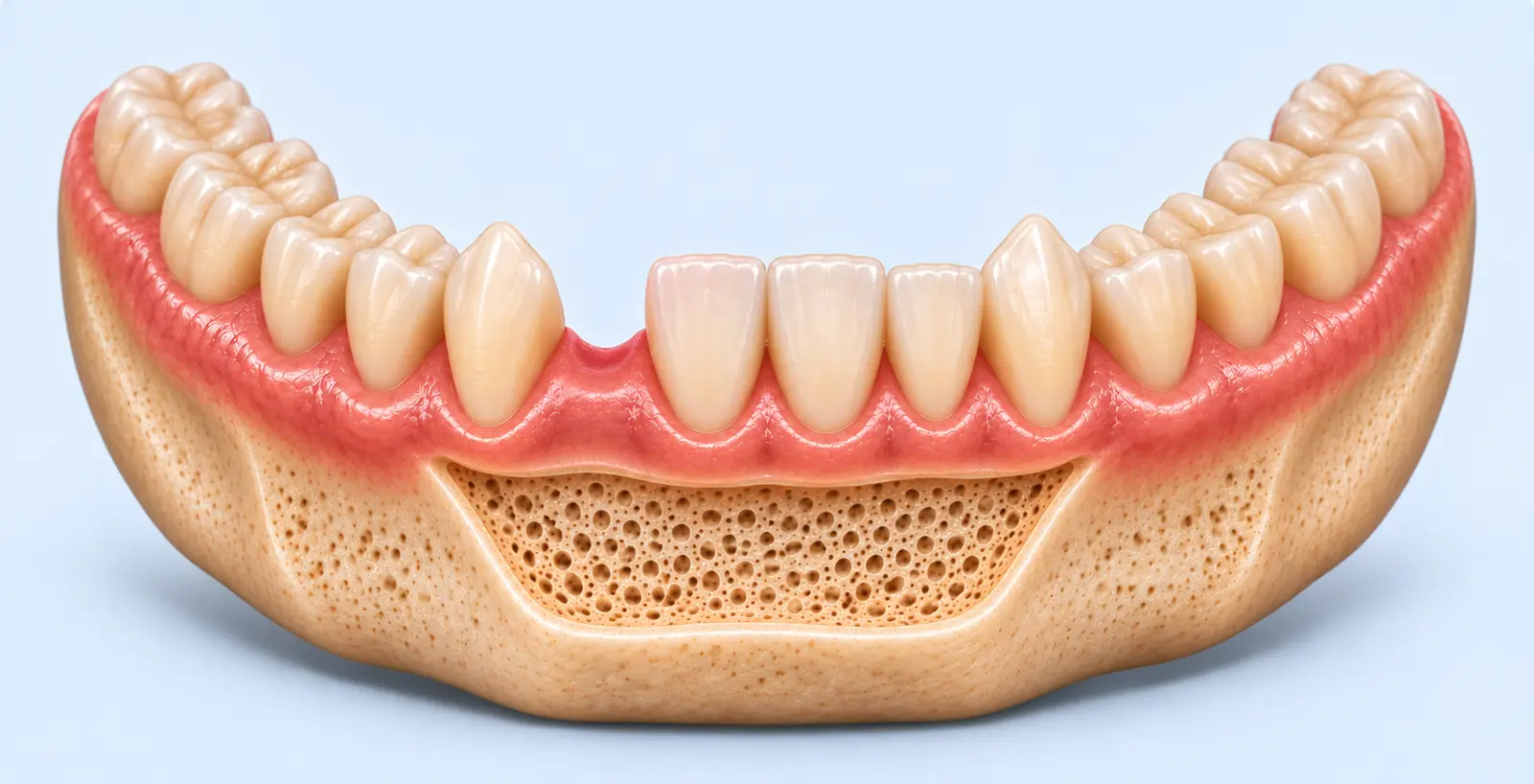
Step 2: Implant Placement
The implant fixture is surgically inserted into the jawbone. [3] If a damaged tooth is still present, it may be extracted before or during implant placement. [5, 21] Bone grafting may also be necessary, depending on the condition of the site. [5, 9]
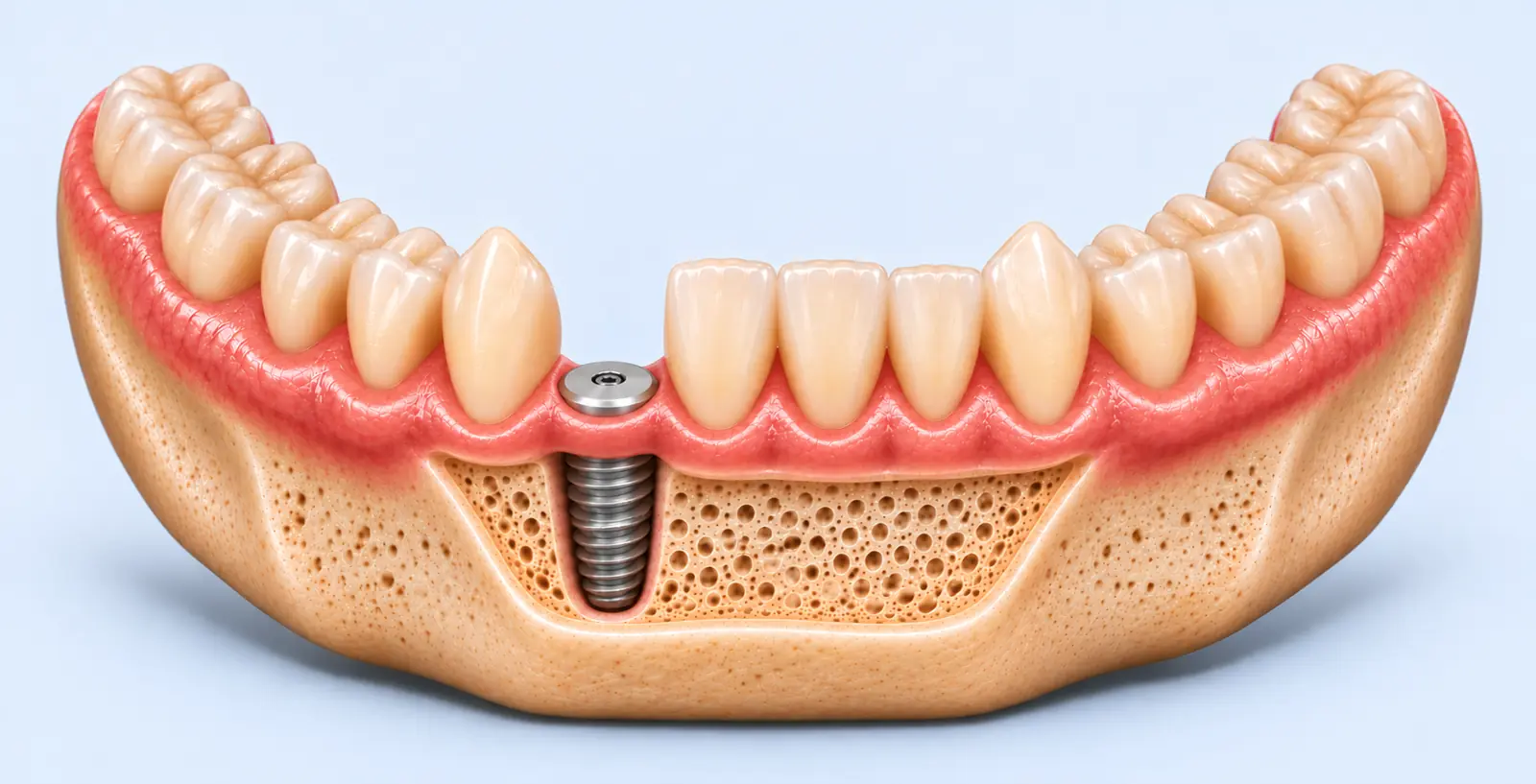
Step 3: Healing and Osseointegration
As the implant site heals, bone gradually grows around the implant and establishes a direct connection with its surface, a process called osseointegration. [5] This process helps establish the stability needed to support the final restoration. [2, 5] Healing commonly takes several months, although the timeline varies. [3, 5]
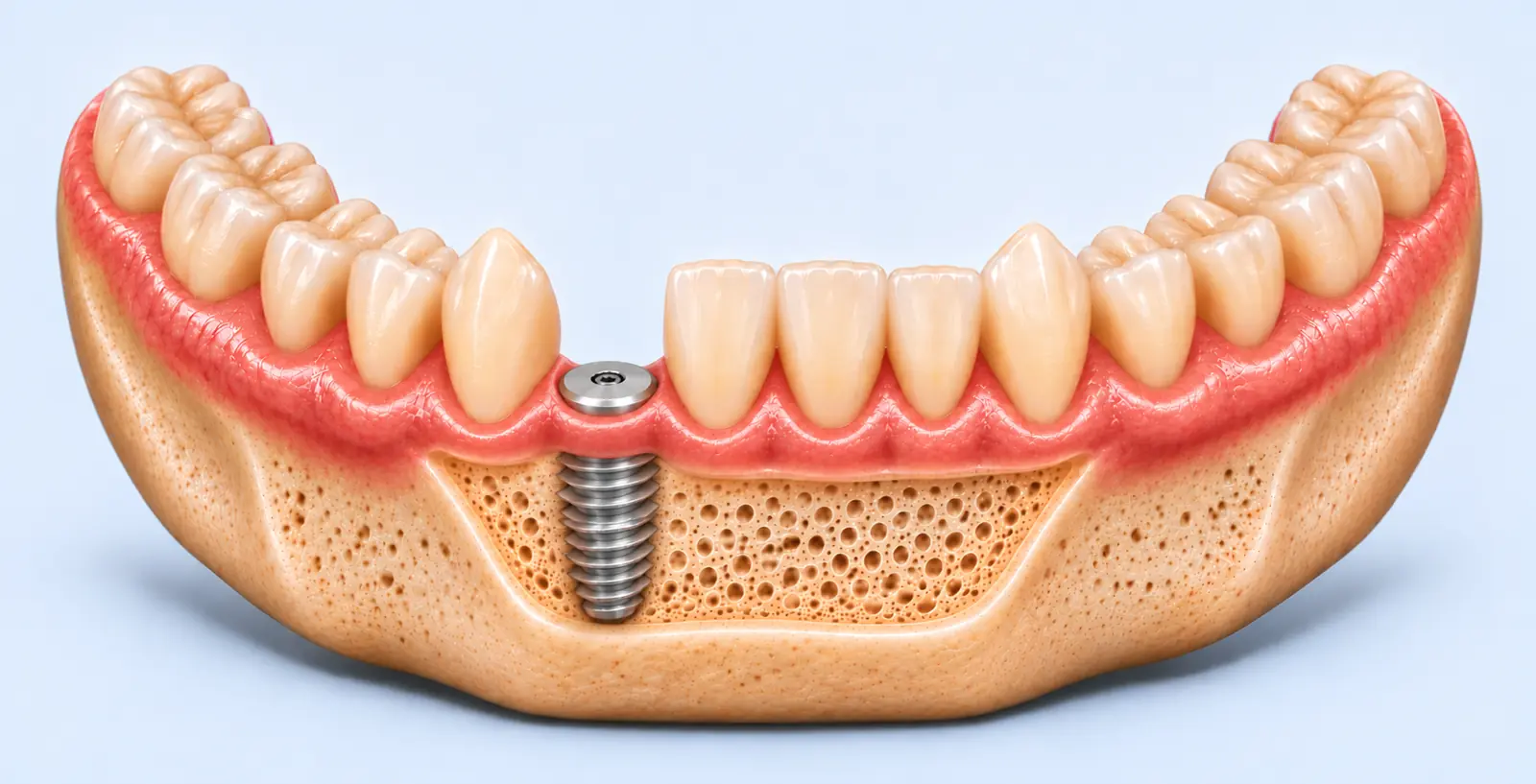
Step 4: Abutment and Crown Placement
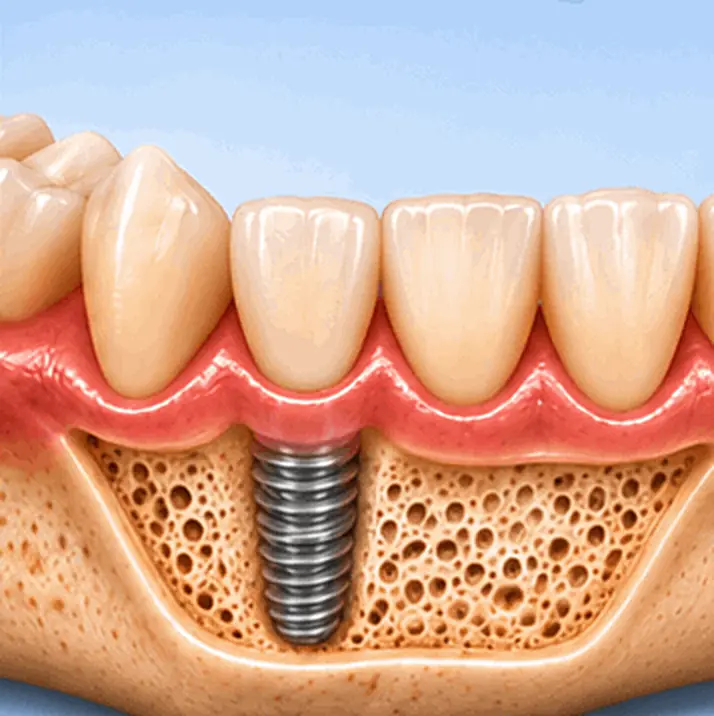
Once the implant is ready to support the restoration, the healing abutment, if present, is removed and the final abutment and custom-made crown are attached. [4, 7] The dentist then checks that the crown fits properly, evaluates the patient’s bite, and makes sure its shade matches the patient’s natural teeth.
In selected cases, a temporary crown or even a final restoration may be placed earlier. [1, 6] This depends on implant stability, bone conditions, and the planned loading protocol. [6, 22, 23]
5. What Happens During Dental Implant Surgery?
Dental implant surgery is usually performed with local anesthesia to numb the treatment area while the patient remains awake. [5, 9] Sedation may also be offered, depending on the patient’s needs and the complexity of the procedure. [5]
After the area is anesthetized, the dentist prepares a precisely sized site in the jawbone and places the implant. [2] Depending on the surgical technique, the gum tissue may be opened to expose the bone or a smaller opening may be used. [5, 24]
The implant is positioned according to the treatment plan, taking into consideration the available bone, the intended crown position, and nearby structures such as nerves, adjacent tooth roots, and the maxillary sinus. [7, 9, 25]
A healing abutment or cover screw may be placed, and stitches may be needed. In some cases, the patient can go home with a temporary crown. [2, 5]
The surgical appointment may take approximately one to two hours for a straightforward single implant, although the actual time depends on the procedure and whether additional treatments are performed.
6. Temporary and Final Teeth
Patients do not always need to go without a visible tooth while the implant heals. [1, 2] Depending on the treatment plan, a temporary tooth replacement may be provided. [2]
Temporary options include a removable partial denture, a temporary bonded restoration, or a temporary crown attached to the implant when sufficient stability is achieved.
A temporary crown attached shortly after implant placement is known as immediate provisionalization. In some cases, the implant may also be immediately loaded, meaning the restoration is designed to receive functional forces earlier than in conventional treatment. [6, 26] These approaches are not appropriate for every patient. [6, 22]
The final crown is generally placed once the implant has achieved adequate stability and the surrounding tissues are ready. [27] Implant crowns are commonly made from ceramic materials, including zirconia or other dental ceramics.
The dentist selects the restoration based on appearance, strength, available space, bite forces, and the patient’s clinical needs.
7. Dental Implant Treatment Timeline
Dental implant treatment often takes several months from the initial examination to placement of the final crown. [5] However, the timeline depends on whether tooth extraction, bone grafting, or other preparatory procedures are necessary. [5, 9]
If sufficient bone is present and the clinical conditions are appropriate, the implant may be placed during the patient’s first treatment visit. A healing period of approximately three to six months is common before the final restoration, although shorter or longer timelines may be appropriate.
If bone grafting is needed, the patient may have to wait for the graft to heal before the implant can be placed. [5, 28] In some cases, bone grafting and implant placement can be performed during the same procedure. [5, 9]
How Many Trips to Mexico Will I Need?
Patients visiting Mexico for a single dental implant generally need two visits: the first to have the implant placed and the second to receive the final crown once healing is complete.
Some patients may need additional visits for extractions, bone grafting, temporary restorations, or follow-up care. Others may qualify for treatment protocols that reduce the number of visits.
Before booking flights or accommodations, ask the clinic for a written treatment timeline that includes the expected number of trips, days required for each visit, healing intervals, and any planned follow-up appointments.
The treatment schedule may change following an in-person clinical examination or if additional procedures become necessary.
8. How Much Do Dental Implants Cost in Mexico?
Dental implant prices in Mexico vary depending on the clinic, implant system, restoration materials, location, and complexity of treatment.
One of the most important details when comparing prices is understanding exactly what the advertised amount includes.
Some clinics advertise the cost of the implant fixture alone, while others provide a combined price for the implant, abutment, and crown. A lower advertised implant price does not necessarily mean the completed treatment will cost less.
What May Be Included in the Total Cost?
A complete treatment estimate may contain separate charges for:
- Initial consultation and diagnostic imaging
- Tooth extraction, if necessary
- Bone grafting or sinus lift, if required
- Dental implant fixture
- Surgical placement
- Healing abutment
- Final abutment and crown
- Temporary tooth replacement
- Follow-up visits or additional procedures
Not every patient requires all these services.
Patients should request an itemized written estimate that identifies the implant brand, crown material, included procedures, and any additional costs that may arise.
Important: Published clinic prices are not guaranteed final treatment costs. The recommended procedure and total price may change after an in-person examination and review of diagnostic imaging.
As an example, one dental clinic in Los Algodones lists a titanium dental implant for $750 and an abutment and crown for an additional $450, bringing the total to $1,200. Additional procedures, if needed, may increase the final cost. These prices are specific to this clinic and do not represent the average cost of dental implants in Los Algodones.
| Type | Los Algodones, Mexico |
|---|---|
| Titanium implant · per implant | $700–$1,440 USDBased on prices from 15 Los Algodones clinics |
| Zirconia (ceramic) implant · per implant | $1,000–$2,200 USDBased on prices from 6 Los Algodones clinics |
Prices confirmed Nov 12, 2026.
| Type | Los Algodones, Mexico |
|---|---|
| Abutment + zirconia crown · per tooth | $550–$850 USDBased on prices from 5 Los Algodones clinics |
Prices confirmed Nov 12, 2026.
Ranges are by crown type; a clinic price that does not state the crown material appears on the clinic’s page but is not in any range.
9. How Long Do Dental Implants Last?
With proper care and routine dental maintenance, dental implants can last for many years, possibly even a lifetime. [19, 29] However, no dental implant is guaranteed to last indefinitely. [3, 29]
While the implant may remain stable for decades, the crown, abutment, or connecting screw may eventually require repair or replacement due to wear, fracture, loosening, or other complications.
Long-term success depends on several factors, including the condition of the surrounding bone and gums, oral hygiene, smoking, bite forces, medical conditions, and regular professional maintenance. [3, 19, 30]
Even a successfully integrated implant can develop complications years after placement. [3, 29] Ongoing dental care is important to identify problems early and help preserve the restoration. [3, 19]
10. Risks and Possible Complications
Dental implant treatment is generally predictable in appropriately selected patients, but it involves surgery and carries potential risks. [5, 12]
Some swelling, bruising, discomfort, and minor bleeding are normal after implant placement. [5, 27] Although serious surgical complications are uncommon, possible risks include infection, injury to neighboring teeth or blood vessels, and nerve damage that may cause numbness, tingling, or pain in the lips, chin, gums, or teeth. [3, 5]
Implants placed in the upper jaw may involve a risk of sinus complications if the implant or surgical procedure affects the maxillary sinus. [3, 5]
Another potential complication is failure of the implant to integrate with the surrounding bone during the initial healing period. [5, 29] Even after successful integration, an implant may lose its stability over time due to bone loss or other complications. [29]
Over time, inflammation can develop in the tissues surrounding an implant. [19] Peri-implant mucositis affects the soft tissues, while peri-implantitis involves inflammation accompanied by progressive loss of supporting bone. [31, 32] If untreated, peri-implantitis can compromise implant stability. [18, 29]
Mechanical complications may also occur, including loosening of screws, fracture of the crown or other components, and damage caused by excessive biting forces. [3, 17, 30]
Patients should discuss their individual risk factors, the dentist’s experience, and the management of potential complications before treatment.
11. Recovery and Aftercare
Recovery after a single dental implant procedure is generally manageable, although discomfort and swelling vary among patients. [9, 27]
Mild bleeding, swelling, tenderness, and bruising may occur during the first few days. [5, 9] The dental team may recommend pain medication, cold compresses, temporary dietary changes, and specific oral hygiene instructions.
Patients should follow a soft-food diet for the duration recommended by their dental team to minimize discomfort, avoid irritation of the surgical site, and reduce excessive chewing forces during healing. [27]
Smoking should be avoided since it can interfere with healing and increase the risk of dental implant complications, including long-term implant failure. [3, 10]
The surgical area should be cleaned according to the dentist’s instructions. [27] Patients should avoid disturbing the site during early healing and follow any restrictions on physical activity, eating, and oral hygiene. [27, 33]
Patients should contact their treating dentist promptly if they experience persistent or worsening pain, increased swelling, fever, uncontrolled bleeding, or other unusual symptoms. [2, 5, 33]
Patients traveling home shortly after surgery should obtain written postoperative instructions and know whom to contact if a problem develops after leaving Mexico.
12. Cleaning and Long-Term Maintenance
Dental implants require daily care, even though the implant and crown cannot develop cavities. [5, 8]
Plaque and bacteria can accumulate around implant-supported restorations, potentially causing inflammation and disease in the surrounding gums and bone. [19, 32]
Patients should maintain good daily oral hygiene, including brushing and flossing. [8, 19] A water flosser may also be a helpful addition, particularly for cleaning areas that are difficult to reach.
The dental team may recommend specific brushes, flossing techniques, or other cleaning aids depending on the restoration. [5, 34]
Regular professional dental cleanings and examinations are essential to monitor the health of the surrounding tissues, evaluate the implant and crown, and identify signs of inflammation or mechanical problems. [5, 19]
For patients who grind or clench their teeth, a night guard may be recommended to help protect the implant and crown from excessive biting forces.
A dental implant does not eliminate the need for routine dental care. [8] Maintaining healthy gums and surrounding bone is essential for long-term success. [3, 19]
13. Dental Implants Compared With Other Tooth Replacement Options
Dental implants are one of several treatment options available to replace a missing tooth. [35] The best option depends on the condition of the neighboring teeth, bone availability, oral health, treatment goals, and cost.
Dental Implant vs. Traditional Dental Bridge
A single dental implant replaces a missing tooth without relying on the neighboring teeth for support. [2, 4] A traditional dental bridge uses crowns placed on the natural teeth on both sides of the gap to support one or more artificial teeth. [16]
A bridge may be appropriate when the adjacent teeth would benefit from crowns or when implant surgery is not suitable. However, preparing otherwise healthy neighboring teeth involves removing some natural tooth structure. [4, 16]
Dental implants require surgery and a healing period, while traditional bridges can often be completed more quickly. [5, 16]
Dental Implant vs. Removable Partial Denture
A removable partial denture is a nonsurgical option for replacing missing teeth and typically has a lower initial cost than dental implants.
However, removable appliances may feel less stable, require periodic adjustments, and depend on the surrounding teeth and oral tissues for support. [5, 36]
An implant-supported crown stays attached to the implant and can be cleaned without being removed. [5, 9]
Is a Dental Implant Always the Best Option?
Not necessarily. Dental implants are an effective treatment for many patients, but they are not appropriate in every situation. [1, 9]
The condition of neighboring teeth, bone availability, medical history, treatment duration, maintenance requirements, and financial considerations should all be evaluated before choosing a restoration.
Patients may also seek a second opinion if they have concerns about a recommended treatment or wish to explore alternatives.
14. Frequently Asked Questions
Is Dental Implant Surgery Painful?
Local anesthesia is used to numb the treatment area, so patients should not experience sharp pain during the procedure. [2, 5] Pressure or vibration may still be felt. Some discomfort, swelling, and tenderness are common after surgery and can usually be managed by following the dentist’s postoperative instructions and taking recommended medications. [2, 27]
Can a Dental Implant Be Placed Immediately After Tooth Extraction?
Yes, in selected cases. [9, 21] Immediate implant placement involves placing a dental implant directly into the socket immediately after a tooth is extracted, rather than waiting for the extraction site to heal. [9, 21] However, the presence of infection around the tooth being extracted, the condition of the surrounding bone, and the ability to achieve adequate implant stability may influence whether this approach is appropriate. [21, 22, 37]
Do I Need a Bone Graft Before Getting a Dental Implant?
Not always. [5] Bone grafting may be recommended when the jawbone does not provide adequate support for an implant or when preserving or rebuilding the bone is necessary for proper implant positioning. [5, 8, 28]
Can I Get a Dental Implant if I Have Gum Disease?
Possibly, but any active periodontal disease should generally be treated and brought under control before dental implants are placed. [2, 8, 35] A history of periodontal disease may increase the risk of complications around dental implants, making good daily oral hygiene and regular professional dental cleanings and examinations especially important. [11, 19]
Are Titanium Dental Implants Safe?
Titanium and titanium alloys have a long history of use in dental implants because of their biocompatibility and ability to integrate with bone. [1, 3, 35] However, all implanted medical devices carry potential risks, and patients should disclose any known material sensitivities or relevant medical conditions. [3]
Are Zirconia Implants an Alternative to Titanium?
Yes. [3] Zirconia implants are a ceramic alternative available for selected patients. [2, 3, 38] However, implant design, clinical indications, available components, and long-term evidence vary by system. The dentist should explain the advantages and limitations of the specific implant being recommended.
What Happens if a Dental Implant Fails?
The appropriate treatment varies depending on what is causing the problem and how severe it is. [18, 29] A failed implant may need to be removed, and additional healing or bone grafting may be necessary before another implant can be considered. [5, 18, 29] In some cases, an alternative tooth replacement may be recommended.
Will I Need to Return to Mexico if a Problem Develops?
Possibly. Some complications can be evaluated or treated by a dentist near your home, while others may require returning to the original clinic. Before treatment, ask about follow-up care, warranty terms, additional charges, and how complications are handled after you return to the United States or Canada.
Do Dental Implants Come With a Warranty?
Some clinics offer warranties for implant fixtures, crowns, or other restorative components. Coverage, exclusions, and conditions vary. A warranty does not guarantee biological success or eliminate the possibility of complications. Patients should request the full terms in writing before treatment.
How Do I Choose a Dental Implant Clinic in Mexico?
Review the dentist’s professional credentials, experience with implant surgery, diagnostic and treatment-planning procedures, and the implant system being used. Ask for a written treatment plan, itemized estimate, expected timeline, and explanation of potential complications. Patients should also confirm how follow-up care will be managed, particularly if the treatment requires multiple trips.
Final Considerations
Dental implants offer a durable option for replacing missing teeth, helping restore chewing function while providing an appearance similar to natural teeth. [4, 19] For patients considering treatment in Mexico, careful planning is especially important because implant treatment may involve several appointments separated by months of healing. [5, 9]
Understanding the complete cost, expected timeline, potential risks, and follow-up requirements can help patients make informed decisions.
The most appropriate treatment should always be determined by a qualified dental professional following an individual clinical examination and appropriate diagnostic evaluation.
Scientific References
The following peer-reviewed scientific publications provide supporting evidence for the information presented in this article.
- [1]American Dental Association, MouthHealthy. Implants. Read source · read Nov 13, 2026
- [2]Cleveland Clinic Health Library. Dental Implants. Read source · read Nov 13, 2026
- [3]U.S. Food and Drug Administration (FDA). Dental Implants: What You Should Know. Read source · read Nov 13, 2026
- [4]American Academy of Periodontology. Single Tooth Dental Implants. Read source · read Nov 13, 2026
- [5]Mayo Clinic Staff. Dental implant surgery (About). Read source · read Nov 13, 2026
- [6]American Association of Oral and Maxillofacial Surgeons (AAOMS). How Do Dental Implants Work?. Read source · read Nov 13, 2026
- [7]AAOMS. What are the Components of a Dental Implant Restoration?. Read source · read Nov 13, 2026
- [8]American Academy of Periodontology. Dental Implant Procedures. Read source · read Nov 13, 2026
- [9]Leeds Teaching Hospitals NHS Trust. Dental Implants (patient information). Read source · read Nov 13, 2026
- [10]Chrcanovic BR, Albrektsson T, Wennerberg A. (2015). Smoking and dental implants: A systematic review and meta-analysis. J Dent. DOI: 10.1016/j.jdent.2015.03.003 Read Study
- [11]Chrcanovic BR, Albrektsson T, Wennerberg A. (2014). Periodontally compromised vs. periodontally healthy patients and dental implants: a systematic review and meta-analysis. J Dent. DOI: 10.1016/j.jdent.2014.09.013 Read Study
- [12]Naujokat H, Kunzendorf B, Wiltfang J. (2016). Dental implants and diabetes mellitus-a systematic review. Int J Implant Dent. DOI: 10.1186/s40729-016-0038-2 Read Study
- [13]American Dental Association, ADA Library. Osteoporosis Medications and Medication-Related Osteonecrosis of the Jaw. Read source · read Nov 13, 2026
- [14]Tyndall DA, et al. (2012). Position statement of the American Academy of Oral and Maxillofacial Radiology on selection criteria for the use of radiology in dental implantology with emphasis on cone beam computed tomography. Oral Surg Oral Med Oral Pathol Oral Radiol. DOI: 10.1016/j.oooo.2012.03.005 Read Study
- [15]AAOMS. Are Dental Implants Safe?. Read source · read Nov 13, 2026
- [16]Cleveland Clinic Health Library. Dental Bridges. Read source · read Nov 13, 2026
- [17]Jung RE, et al. (2012). Systematic review of the survival rate and the incidence of biological, technical, and aesthetic complications of single crowns on implants reported in longitudinal studies with a mean follow-up of 5 years. Clin Oral Implants Res. DOI: 10.1111/j.1600-0501.2012.02547.x Read Study
- [18]Masaki C, et al. (2024). Treatment strategies for dental implant removal: A literature review. Jpn Dent Sci Rev. DOI: 10.1016/j.jdsr.2024.01.002 Read Study
- [19]American Academy of Periodontology (AAP). Peri-Implant Diseases. Read source · read Nov 13, 2026
- [20]Cleveland Clinic Health Library. Dental X-Rays. Read source · read Nov 13, 2026
- [21]Esposito M, et al. (2010). Interventions for replacing missing teeth: dental implants in fresh extraction sockets (immediate, immediate-delayed and delayed implants). Cochrane Database Syst Rev. DOI: 10.1002/14651858.CD005968.pub3 Read Study
- [22]Benic GI, Mir-Mari J, Hämmerle CH. (2014). Loading protocols for single-implant crowns: a systematic review and meta-analysis. Int J Oral Maxillofac Implants. DOI: 10.11607/jomi.2014suppl.g4.1 Read Study
- [23]Gallucci GO, et al. (2018). Implant placement and loading protocols in partially edentulous patients: A systematic review. Clin Oral Implants Res. DOI: 10.1111/clr.13276 Read Study
- [24]Pitman J, et al. (2023). Immediate implant placement with flap or flapless surgery: A systematic review and meta-analysis. J Clin Periodontol. DOI: 10.1111/jcpe.13795 Read Study
- [25]Tatakis DN, Chien HH, Parashis AO. (2019). Guided implant surgery risks and their prevention. Periodontol 2000. DOI: 10.1111/prd.12292 Read Study
- [26]Esposito M, et al. (2013). Interventions for replacing missing teeth: different times for loading dental implants. Cochrane Database Syst Rev. DOI: 10.1002/14651858.CD003878.pub5 Read Study
- [27]AAOMS. Healing Process for Dental Implants. Read source · read Nov 13, 2026
- [28]Cleveland Clinic Health Library. Dental Bone Graft. Read source · read Nov 13, 2026
- [29]AAOMS. Are Dental Implants Permanent?. Read source · read Nov 13, 2026
- [30]Vidal RA, et al. (2025). Relationship between bruxism and different types of mechanical complications in implant-supported prosthesis: A systematic review with meta-analysis. J Prosthodont. DOI: 10.1111/jopr.70046 Read Study
- [31]Heitz-Mayfield LJA, Salvi GE. (2018). Peri-implant mucositis. J Clin Periodontol. DOI: 10.1111/jcpe.12953 Read Study
- [32]Berglundh T, et al. (2018). Peri-implant diseases and conditions: Consensus report of workgroup 4 of the 2017 World Workshop on the Classification of Periodontal and Peri-Implant Diseases and Conditions. J Clin Periodontol. DOI: 10.1111/jcpe.12957 Read Study
- [33]AAOMS. Stages of Wound Healing After Oral Surgery. Read source · read Nov 13, 2026
- [34]American Dental Association, ADA Library (Oral Health Topics). Dental Floss/Interdental Cleaners. Read source · read Nov 13, 2026
- [35]AAOMS. Are You a Candidate for Dental Implants?. Read source · read Nov 13, 2026
- [36]Cleveland Clinic Health Library. Dentures. Read source · read Nov 13, 2026
- [37]Lee J, et al. (2018). Comparison of immediate implant placement in infected and non-infected extraction sockets: a systematic review and meta-analysis. Acta Odontol Scand. DOI: 10.1080/00016357.2018.1453084 Read Study
- [38]Pieralli S, et al. (2017). Clinical Outcomes of Zirconia Dental Implants: A Systematic Review. J Dent Res. DOI: 10.1177/0022034516664043 Read Study
Medical Disclaimer
This page is provided for educational purposes only and is not a substitute for professional dental advice, diagnosis, or treatment.
Whether a dental implant is appropriate depends on each patient’s anatomy, oral health, medical history, and treatment needs.
Consult a qualified dental professional for a personalized evaluation before undergoing treatment.