

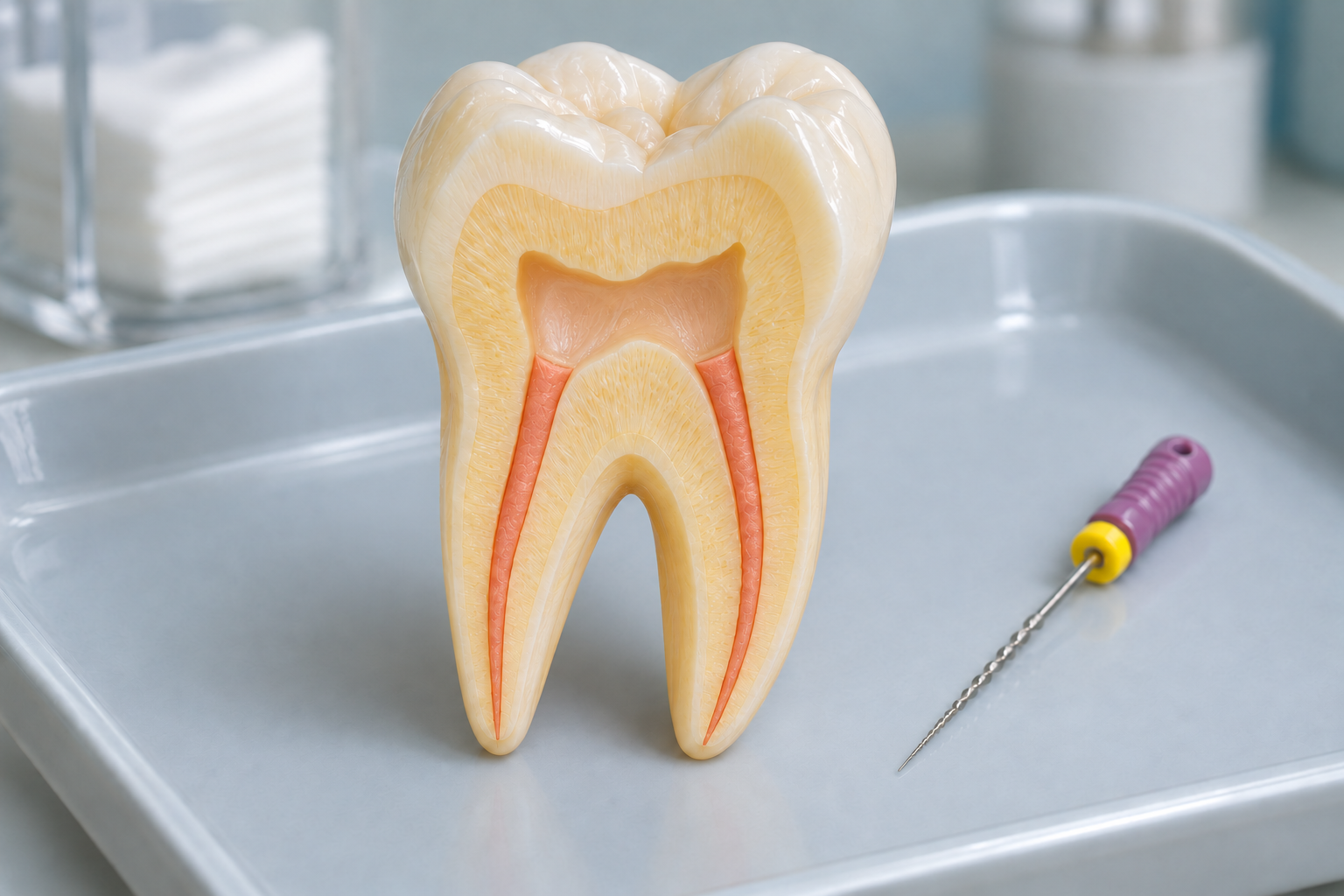
What is root canal treatment?
Root canal treatment is a dental procedure used to save a tooth when the pulp (the soft tissue inside the tooth) is infected or too inflamed to heal. Your dentist removes the damaged pulp, cleans the spaces inside the roots, and seals them. [1]
Afterward, a permanent filling, crown, or other restoration protects the treated tooth. The type of restoration depends on which tooth was treated and how much healthy tooth structure remains. [1]
When is a root canal recommended?
You might need a root canal when a crack, an injury, or a cavity that has reached the pulp causes lasting inflammation or infection inside the tooth. [2] An injury can affect the pulp even when the tooth looks intact. [2]
Pain when you bite or sensitivity that continues after you’ve finished eating or drinking something hot or cold are reasons to have the tooth checked. Some teeth with pulp damage cause little or no pain. Your dentist uses an exam, X-rays, and tests such as checking how the tooth responds to cold to determine whether root canal treatment is needed. [2–4]
What happens during a root canal?
- Numbing and isolating the tooth. The dentist numbs the area with local anesthetic and places a dental dam (a thin protective sheet) around the tooth to keep saliva away during treatment. [1]
- Cleaning the canals. The dentist makes a small opening in the tooth, removes the pulp, and cleans, disinfects, and shapes the canals. [5]
- Filling and sealing the canals. Once the canals are ready, the dentist fills and seals them, usually with a rubber-like material called gutta-percha. [1]
- Restoring the tooth. After the root canal is complete, the dentist restores the tooth with a permanent filling, crown, or other restoration. This can happen at the same visit or at a later appointment. If the final restoration is scheduled for later, the dentist places a temporary filling to close the opening in the meantime. [1, 5–6]
Does a root canal hurt?
Once the tooth is numb, most people feel little or no pain during treatment. If you feel pain during the procedure, let your dentist know. [7]
After the numbness wears off, the tooth may feel tender for a few days. Your jaw may also feel sore from keeping your mouth open during the procedure. [8]
How do you care for your tooth after a root canal?
- Chew on the other side until your dentist places the final restoration. Avoid biting down hard on the treated tooth while it has a temporary filling. [8]
- Keep brushing and flossing. Be gentle around the treated tooth and follow any specific instructions from your dentist. [8]
- Call your dentist promptly if the temporary filling comes out, your bite feels uneven, you notice swelling, or your original symptoms return. [8]
How many visits does a root canal take?
A root canal can often be completed in one or two visits. Some teeth need additional appointments, depending on the condition of the tooth. [1, 9]
If you’re traveling to Mexico for treatment, ask the clinic for an appointment estimate that covers both the root canal and the final restoration. If you’ll need more than one appointment, ask how far apart the visits should be so you can plan how long to stay.
What should a root canal quote in Mexico include?
The cost can vary by tooth and by how complex it is to treat. A quote for the root canal alone may leave out the permanent filling or crown that completes your treatment. [10]
Ask the clinic for an itemized quote that shows which services are included and which are charged separately.
- The exam and any X-rays
- Root canal treatment for the specific tooth
- The recommended permanent filling or crown, including a buildup if needed to support the crown
- Any follow-up visits the clinic expects you to need
Confirm whether the quote is in Mexican pesos or U.S. dollars. If the treatment plan changes after your exam, ask for an updated total before treatment begins.
What are the alternatives to a root canal?
If a tooth needs a root canal, the main alternative is extraction (removing the tooth). Extraction may be recommended if the tooth is too damaged to restore. If you’re unsure whether it can be saved, you can ask an endodontist (a root canal specialist) for a second opinion. [5, 11]
If you’re considering extraction, ask whether the missing tooth should be replaced. Depending on your situation, options may include an implant, a bridge, or a removable partial denture. [11, 12]
If you're deciding between saving the tooth and having it removed, compare the total cost and number of visits for a root canal and final restoration with those for an extraction and any tooth replacement you plan, such as an implant or bridge. An extraction may cost less on its own, but replacing the tooth adds cost and appointments.
Can you wait until your trip to Mexico for a root canal?
If a dentist has recommended a root canal, ask how soon you need treatment before booking your trip. Even if a toothache eases, an infection can still be present. [13]
If you develop facial swelling or a fever along with tooth pain, seek urgent dental care where you are. [14]
Who should you contact if you have a problem after a root canal when you're back home?
Before leaving Mexico, ask the clinic, “If I have a problem with the tooth after I return home, who should I contact?” Ask how to reach the dentist who treated you and what to do if you need an in-person exam. Request copies of your treatment notes and X-rays so you can share them if you need care at home. [15]
How long can a tooth last after a root canal?
A tooth can remain functional for many years after a root canal. How long it lasts depends in part on how much healthy tooth structure remains and how the tooth is restored. [16, 17]
A treated tooth can develop new decay or become infected again, even years later. If that happens, an endodontist can assess whether retreatment (reopening the tooth to clean and seal the canals again) could help save it. [18]
Who can perform a root canal in Mexico?
A general dentist or an endodontist (a root canal specialist) can perform root canal treatment. Your dentist may recommend seeing an endodontist if your case is complex or if a tooth that already had a root canal needs treatment again. [11, 18, 19]
Ask the clinic who will perform your root canal and request that dentist’s full name and cédula profesional (professional license) number. Then check their license status on the clinic’s profile on Mexico Dental Treatment. We’ve verified many of the licenses in our directory. If a dentist’s license is marked “Not verified,” it means we couldn’t confirm it using the information available to us. To check a license yourself, see our guide How to Verify a Dentist’s Credentials in Mexico. If the clinic identifies the dentist as an endodontist, ask for their cédula de especialidad (specialty license) number as well. You can look up the credentials in Mexico’s Registro Nacional de Profesionistas (National Registry of Professionals). [20]
Do you need a crown after a root canal?
Your dentist may recommend a crown after a root canal, depending on how much healthy tooth structure is left. If enough of the tooth remains to support a permanent filling, that may be sufficient. Otherwise, a crown may be the best option to protect the remaining tooth structure. [21]
What if a complication happens during a root canal?
Problems like a small instrument breaking inside a canal or an accidental opening in the root don’t happen very often. If one does happen, your dentist can explain what happened and help you decide on the next step. [22, 23]
Before you book
If you’re considering a root canal in Mexico, first ask how soon the tooth needs treatment. Before making travel plans, confirm who will treat you and get a written estimate that covers both the root canal and the final restoration. Then check their license status on the clinic’s profile on Mexico Dental Treatment. We’ve verified many of the licenses in our directory. If a dentist’s license is marked “Not verified,” it means we couldn’t confirm it using the information available to us. To check a license yourself, see our guide How to Verify a Dentist’s Credentials in Mexico. Ask the clinic to estimate how many appointments you’ll need and how far apart they’ll be so you can plan your stay.
References
- [1]American Association of Endodontists. Root Canal Explained Read source
- [2]American Association of Endodontists. Reasons for Root Canal Treatment Read source
- [3]American Association of Endodontists. Tooth Pain Read source
- [4]American Association of Endodontists. Endodontists’ Guide to CDT Read source
- [5]NHS. Root canal treatment Read source
- [6]American Association of Endodontists. Restoration of Endodontically Treated Teeth Read source
- [7]American Association of Endodontists. Benefits of Root Canal Treatment Read source
- [8]American Association of Endodontists. Post-Treatment Care Read source
- [9]American Association of Endodontists. At the Endodontist’s Office Read source
- [10]American Association of Endodontists. How Much Does a Root Canal Cost? Read source
- [11]American Association of Endodontists. Treatment Options for the Diseased Tooth Read source
- [12]Cambridge University Hospitals. Sinus Lift Procedures Read source
- [13]MedlinePlus. Tooth abscess Read source
- [14]NHS. Dental abscess Read source
- [15]CDC Yellow Book. Medical Tourism Read source
- [16]Tooth Survival After Endodontic Treatment Read source
- [17]Remaining Tooth Structure and Prognosis of Restored Endodontically Treated Teeth Read source
- [18]American Association of Endodontists. Endodontic Retreatment Explained Read source
- [19]American Association of Endodontists. What’s the Difference Between a Dentist and an Endodontist? Read source
- [20]Government of Mexico. Consultar cédula profesional (Look Up a Professional License) Read source
- [21]American Association of Endodontists. Treatment Standards White Paper Read source
- [22]Leeds Teaching Hospitals NHS Trust. Understanding Your Endodontic (Root Canal) Treatment Read source
- [23]Queensland Health. Root Canal Treatment Informed Consent Read source